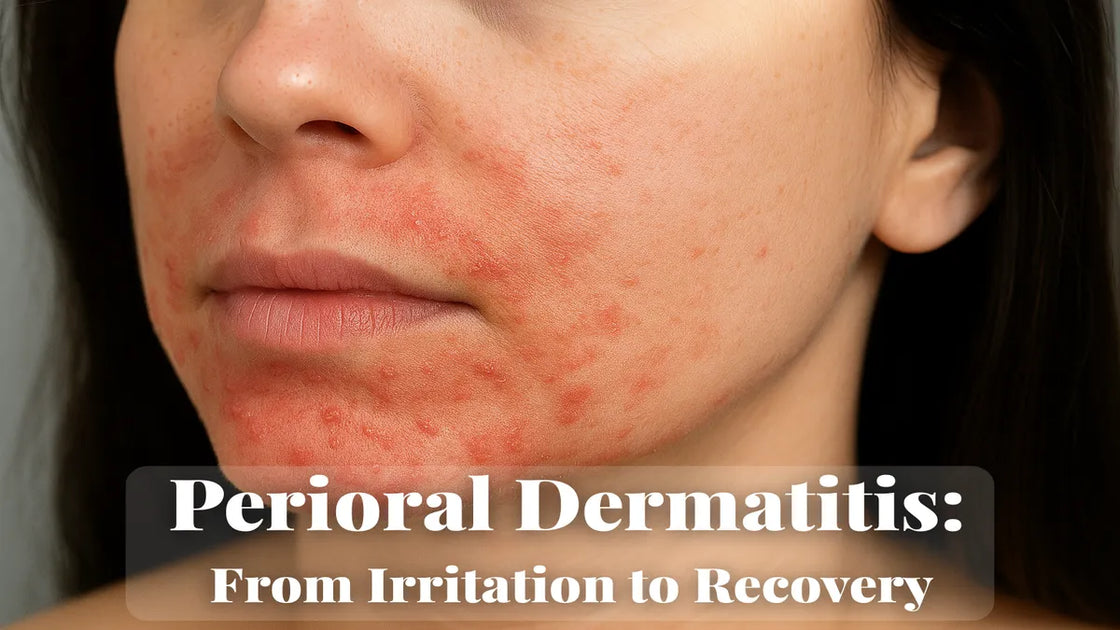
Ninety percent of perioral dermatitis cases occur in women, typically between ages 20 and 45. This condition is notably difficult to manage, with many patients experiencing treatment failures[1]. You're cycling through prescriptions. Nothing helps. Some treatments make the rash worse than before. Sound familiar? Here's what decades of dermatology research finally reveals about why treatments fail and what actually works.
Think about it. You've likely tried prescription steroid creams, antibiotic gels, and expensive skincare routines. Each time, there was initial hope. Then frustration when the rash returned worse than before. Research shows that steroid-induced facial dermatitis predominantly affects women (72% of cases), and many patients experience adverse effects from treatment attempts[2]. The condition can worsen with continued steroid use, creating a cycle of dependence and rebound[3]. You know your skin better than anyone. Every failed treatment. Every moment of self-consciousness.
In this article, you'll discover why traditional treatments often backfire, how to identify the hidden triggers making your condition worse, and evidence-based strategies that address root causes rather than just symptoms. Studies show that proper management, including the discontinuation of inappropriate treatments and identification of triggers, leads to improvement in most patients[1]. Plus, you'll learn about identifying personal skincare triggers to prevent future flares. We'll present the latest research without false promises.
Research reveals something surprising. The most effective approach often isn't another cream. It's stopping the wrong treatments and supporting your skin's natural healing with targeted therapy. Discontinuation of topical steroids combined with appropriate treatment shows significant success in clearing perioral dermatitis[2].
Key Takeaways
- Steroid Dependency Creates a Vicious Cycle - Perioral dermatitis can be worsened or induced by prolonged steroid use
- Stopping Wrong Treatments Is Key - Discontinuation of topical steroids combined with proper therapy leads to clearing
- Hidden Triggers Are Everywhere - Fluoride toothpaste and skincare products can trigger flares
- Oral Antibiotics Often Effective - Systemic antibiotics like tetracycline show better response than topical treatments alone
- Recovery Takes Time and Patience - Most cases improve with proper management over several weeks to months
Table of Contents
Understanding Perioral Dermatitis: More Than Just Red Bumps
Look closely at where the rash appears. Small red bumps cluster around your mouth, nose, and sometimes eyes. But here's the telltale sign most people miss: the skin right against your lip border stays clear[1]. This "sparing" pattern is actually how dermatologists diagnose the condition.
Who gets this? Mostly women in their 20s and 30s. About 67% of patients have a history of allergies or asthma[1]. If you have atopic tendencies, you're at higher risk. But children can develop it too, especially boys before puberty.
As Dr. Steven Harlan, MD, FAAD, Board Certified Dermatologist and inventor of SmartLotion®, explains: "We are nearing the 60th anniversary of the term 'Perioral dermatitis,' first appearing in a 1964 publication by Mihan and Ayers. Unfortunately, it swept together all the previous banal versions of eczematous facial disorders and mixed them with the new virulent steroid-induced rosacea-like facial dermatitis before we understood the difference."[12]
His decades of research reveal a crucial distinction that most practitioners miss. There are actually two distinct types of perioral dermatitis:
- Spontaneous Perioral Dermatitis: This classic, milder form has existed for centuries. It often arises from skin barrier issues, irritants, or underlying conditions like rosacea or atopy. It typically responds well to gentle, targeted treatments.
- Steroid-Induced Perioral Dermatitis: This more severe, treatment-resistant form emerged with widespread use of topical steroids. It's essentially a form of topical steroid withdrawal (TSW) and requires a completely different approach focused on eliminating the offending steroid.
This distinction is more than academic. It explains why your treatment history matters so much. Many patients start with the spontaneous form, get prescribed a topical steroid that seems to help at first, then develop the steroid-induced version.
Understanding which type you have changes everything about your treatment approach.
Clinical Insight: Unlike acne, perioral dermatitis rarely involves comedones (blackheads/whiteheads). The papules are typically uniform in size and have a distinctive pink-to-red hue rather than the deeper inflammatory color of cystic acne.
Why Traditional Treatments Fail (And Make Things Worse)
Here's what nobody warns you about. The treatments that should help often make things worse. Much worse. This isn't your imagination. It's not something you're doing wrong. There's a scientific explanation.
The Steroid Dependency Cycle
Let's talk about the elephant in the room: steroid creams. They clear perioral dermatitis fast. Three to five days and the rash looks better. Then you stop. Seven to ten days later? The rash returns angrier than before[2].
So you use the steroid again. It works again. You stop again. It rebounds again. Each cycle digs the hole deeper. Your skin becomes dependent on the medication.
This pattern has played out on a massive scale. Twice. Dr. Harlan's research documents two major epidemics of steroid-induced perioral dermatitis. The first struck from 1962 to 1972. About 10% of people using hydrocortisone on their face developed an early version of steroid withdrawal[12]. Things got worse after 1964 when stronger fluorinated steroids hit the market. Doctors were baffled. How could anti-inflammatory drugs cause inflammation?
The second epidemic arrived in the early 1990s when mometasone furoate was marketed for facial use. History repeated itself. These two waves left dermatologists wary of using any steroid on the face, even gentle ones.

The cycle works like this: you apply a steroid cream, see improvement in 3-5 days, then stop treatment. Within 7-10 days, the rash returns worse than before. So you reapply the steroid. Each cycle makes your skin more dependent and sensitive.
"We see patients who've been trapped in this steroid rebound cycle for months or even years. The skin becomes addicted to the anti-inflammatory effect, and withdrawal symptoms can be severe."
- Dr. James Del Rosso, Dermatology ResearchSound familiar? You might have told your doctor the same thing. As Dr. Harlan notes: "Throughout the 1960s and 70s, mixing these two historically distinct types of perioral dermatitis in a discussion contributed to poor understanding both then and now. Most patients insisted they had the perioral problem 'before' the topical steroid was initiated."[12] This pattern occurs because many patients do have underlying spontaneous perioral dermatitis that then gets dramatically worsened by steroid treatment, creating the more severe steroid-induced form.
However, not all was lost. Dr. Harlan's research highlights a crucial breakthrough: "By the late 1970s, physicians at Mayo Clinic thoroughly understood how to prevent, treat, and avoid TSW and continued to use low potency topical steroids on the face for chronic recurring dermatitis."[12] This understanding would eventually lead to the development of safer formulations that could manage perioral dermatitis without triggering the dependency cycle.
Treatment Resistance Patterns
Here's a pattern that puzzles patients: pills work better than creams. Oral tetracycline achieves significantly better clearance than topical treatments[4]. Why? Understanding why topical steroids fail explains everything.
Your skin barrier is already damaged. Adding more products, even helpful ones, often irritates it further. Perioral dermatitis patients lose moisture through their skin faster than normal[1]. That compromised barrier makes every topical application a potential problem.
History tells a fascinating story here. Before steroids arrived in the late 1950s, dermatologists used sulfur, ichthyol, and bland creams. These gentle approaches worked well for the spontaneous forms of perioral dermatitis that had existed for centuries.
Then came the steroid-induced version. Those same gentle treatments failed completely. This stark difference proved what researchers suspected: steroid-induced perioral dermatitis was a fundamentally different beast.
📚 Related Resource
For comprehensive guidance on managing treatment-resistant skin conditions, explore: Understanding and Managing Topical Steroid Withdrawal
Hidden Triggers That Keep You Stuck
You're doing everything right. Stopped the steroids. Following the protocol. So why isn't your skin healing? Hidden triggers might be sabotaging your progress. And they're hiding in places you'd never suspect.
Learning to spot trigger patterns changes the game. Let's unmask the culprits.
The Fluoride Connection
Check your bathroom counter. That toothpaste you've used for years? It might be the problem. Fluoride triggers perioral dermatitis in many patients[5]. People switch to fluoride-free alternatives and watch their rash improve. No new medications. Just different toothpaste.

Toothpaste ingredients including fluoride compounds, flavoring agents like carvone and menthol, and preservatives have been identified as potential triggers for perioral contact dermatitis[6]. The mechanism involves contact irritation or allergic sensitization in susceptible individuals.
Skincare Sabotage
Your expensive skincare routine might be making things worse. Heavy moisturizers seal in everything, including irritants. Rich creams alter your skin barrier. Foundations clog already-stressed pores[7].
Here's the counterintuitive truth: less is more. When your skin barrier is compromised, even gentle products can irritate. Switching to a single gentle eczema cream designed for sensitive skin often works better than layering multiple products. Your skin needs breathing room to heal.
Common Triggers
Skincare products and oral care items are frequent triggers for perioral dermatitis flares
Evidence-Based Solutions That Actually Work
So what actually helps? Not more products. Not stronger steroids. The answer might surprise you. The most effective treatments break the inflammation cycle instead of just masking symptoms.
The Zero Therapy Approach
Sometimes the best treatment is no treatment at all. Sounds strange, right? But "zero therapy" has strong evidence behind it. Stop the cosmetics. Stop the steroids. Stop everything that touches your face except gentle cleansing[1].
Your skin needs a reset. Clinical experience shows this first step is critical to healing.

However, zero therapy requires patience. Initial worsening is common, especially if you've been using steroids. Clinical observation shows that many patients experience a "rebound flare" lasting 1-3 weeks before improvement begins[2].
Targeted Treatments
What if zero therapy isn't enough? Sometimes you need active treatment. But not just any treatment. Here's what research shows actually delivers results:
| Treatment | Success Rate | Time to Improvement | Relapse Rate |
|---|---|---|---|
| Oral Tetracycline | High efficacy reported[4] | ~3 months for healing | Low with proper treatment |
| Topical Metronidazole | Effective for mild to moderate cases[7] | 6-8 weeks | Variable |
| Zero Therapy Only | Improvement in most patients[1] | 4-12 weeks | Lower than pharmacotherapy |
| Topical Immunomodulators | Alternative steroid-free option[8] | 4-6 weeks | Variable |
A surprising fact about tetracyclines: they don't work because they kill bacteria. They work by calming inflammation[1]. They quiet the overactive immune response driving the rash.
This discovery came during the first perioral dermatitis epidemic. Doctors noticed tetracycline helped both rosacea and severe perioral cases. The key breakthrough? Withdrawing the steroids AND adding tetracycline. That combination ended the first epidemic.
But researchers didn't stop there. They asked: what if we could use steroids safely on the face?
The Breakthrough That Changed Everything: By the late 1970s, researchers discovered something counterintuitive. Adding sulfur to low-dose hydrocortisone actually prevented the rebound problem. Dr. Harlan's research confirms: "From 1979 forward, many dermatologists used nonmonograph (less than 2%) sulfur with hydrocortisone acetate to successfully treat chronic facial conditions without inducing perioral dermatitis."[12]
Why does this combination work? Sulfur appears to block the pathway that causes steroid dependency. It prevents skin thinning. It stops the rebound cycle before it starts. Think of it as a safety mechanism built into the treatment itself.
The evidence is striking. A 15-year study of 300 patients using this sulfur-hydrocortisone approach showed zero instances of steroid acne, rebound, or skin thinning[9]. Even with daily facial use for years.

Based on these findings, Dr. Harlan developed SmartLotion®. It combines 0.75% hydrocortisone with 0.5% sulfur in a formulation specifically designed for sensitive facial skin. The result? Effective treatment without the dependency trap that plagued two generations of patients.
The formulation also repairs your skin barrier. Petrolatum strengthens natural defenses. Glycerin pulls moisture deep into skin. Dimethicone creates a protective shield. Together, they help your skin heal faster while the active ingredients calm inflammation.
What to Expect: Your Recovery Timeline
Here's the hard truth about healing. It takes longer than you want. Weeks, not days. Sometimes months. But knowing what's coming makes the wait bearable. Let's map out what actually happens.
Week 1-2: The Adjustment Phase
If stopping steroids, expect a rebound flare. This is common in patients discontinuing topical corticosteroids but indicates healing has begun[2].
Week 3-4: Early Stabilization
New papules should stop forming. Existing lesions may still be present but should feel less irritated.
Week 5-8: Visible Improvement
Most patients see significant reduction in lesions during this phase[4]. Skin sensitivity typically improves significantly.
Week 9-14: Near-Complete Resolution
Most patients achieve significant clearance by this point with appropriate treatment[4].
One important warning: recovery isn't a straight line. Some patients hit setbacks around weeks 3-6[7]. Usually it's because they reintroduced products too quickly. Patience pays off. Stress makes things worse, so give yourself grace during the process.

Prevention Strategies for Long-Term Success
You've finally cleared the rash. Now what? This is where most people stumble. They go back to old products too fast. They forget what triggered the flare. Three months later, it's back.
Don't let that be you. The most important rule is simple: avoid what caused the problem. Patients who stay away from known triggers have dramatically lower relapse rates[5].
High Success Rate
Relapse prevention is significantly improved when triggers are consistently avoided
Skincare simplification is equally crucial. Post-recovery protocols should include:
- Gentle, fragrance-free cleansers only
- Minimal moisturizing (only if skin feels tight)
- Fluoride-free toothpaste permanently
- Avoiding face creams with heavy textures
- Never using topical steroids on facial skin
For those with sensitive skin or eczema history, maintaining skin barrier health becomes even more important. Clinical observations show that patients with atopic backgrounds have higher relapse rates without proper maintenance care[1].
📚 Related Resource
Learn advanced moisturizing strategies to support barrier repair and prevent relapses: The Complete Guide to Layering Moisturizers for Optimal Skin Health
"SmartLotion®, our eczema cream, when used as directed, can be used daily for years to manage perioral dermatitis. So if you're worried about topical steroid withdrawal (TSW) or the 0.75% hydrocortisone effect on your perioral dermatitis, this long-term safety study should lay your fears to rest."
- Dr. Steven Harlan, MD, FAADThis long-term safety profile is crucial because perioral dermatitis often requires ongoing management. Unlike traditional steroid creams that create dependency, SmartLotion's® formulation - based on the clinically successful approach - provides consistent relief without the rebound phenomenon that plagued the two epidemics.[12]
Long-term success also requires understanding your personal trigger patterns. Clinical experience suggests keeping a simple log during the first six months post-recovery to identify individual sensitivities[1]. It's also important to differentiate perioral dermatitis from seborrheic dermatitis, which can present similarly.
Moving Forward: Hope Based on Science
Perioral dermatitis can feel impossible. Treatment after treatment fails. Your confidence takes hit after hit. But here's what the research proves: when you stop the wrong treatments and address root causes, most patients succeed[1].
The key is knowing what you're dealing with. Dr. Harlan calls it "one of the great detective stories in Dermatology"[12]. Once you know whether you have spontaneous perioral dermatitis or the steroid-induced type, the right treatment path becomes clear. One responds to gentle targeted care. The other requires complete steroid withdrawal first.
Your skin can heal. It needs three things: the right diagnosis, the right treatment, and enough time. Patience matters. Consistency matters even more.
If you're also dealing with rosacea, know that the conditions often overlap and may need combined approaches.
For long-term management without the rebound trap, SmartLotion® was developed specifically from the research that ended the steroid epidemics. Professional guidance can cut your recovery time dramatically. You don't have to figure this out alone.
References
- Del Rosso JQ. "Management of Papulopustular Rosacea and Perioral Dermatitis with Emphasis on Iatrogenic Causation." J Clin Aesthet Dermatol, vol. 4, no. 8, 2011, pp. 20-30. PMC3168247. View Study
- Bhat YJ, et al. "Clinical and Histopathological Profile of 200 Cases of Perioral Dermatitis." Indian J Dermatol, vol. 56, no. 3, 2011, pp. 265-268. PMC3088930. View Study
- Sheary B. "Steroid withdrawal effects following long-term topical corticosteroid use." Dermatitis, vol. 29, no. 4, 2018, pp. 213-218. View Study
- Urabe H, Kōda H. "Perioral Dermatitis and Rosacea-Like Dermatitis: Clinical Features and Treatment." Dermatology, vol. 152, Suppl. 1, 1976, pp. 155-160. View Study
- Toma N, et al. "Contact allergy caused by stannous fluoride in toothpaste." Contact Dermatitis, vol. 78, no. 4, 2018, pp. 304-306. View Study
- Andersen KE. "Contact allergy to toothpaste flavors." Contact Dermatitis, vol. 4, no. 4, 1978, pp. 195-198. View Study
- Boeck K, et al. "Perioral Dermatitis in Children – Clinical Presentation, Pathogenesis-Related Factors and Response to Topical Metronidazole." Dermatology, vol. 195, 1997, pp. 235-238. View Study
- Firooz A. "Pimecrolimus Cream, 1%, vs Hydrocortisone Acetate Cream, 1%, in the Treatment of Facial Seborrheic Dermatitis." Archives of Dermatology, vol. 142, no. 8, 2006, pp. 1065. View Study
- Jorizzo J, et al. "Long-term safety and efficacy comparison of desonide and hydrocortisone ointments in pediatric patients." J Am Acad Dermatol, vol. 33, no. 1, 1995, pp. 74-77. View Study
- Cheung MJ, Taher M, Lauzon GJ. "Acneiform facial eruptions: a problem for young women." Can Fam Physician, vol. 51, 2005, pp. 1071-1073. PMC1472951. View Study
- Veien NK, Munkvad JM. "Topical metronidazole in the treatment of perioral dermatitis." J Am Acad Dermatol, vol. 24, 1991, pp. 258-260. View Study
- Harlan S, MD, FAAD. "Understanding and Fixing Perioral Dermatitis." Board Certified Dermatologist, Inventor of SmartLotion®. Incorporates research from: Harlan, S.L. (2008) "Steroid Acne and Rebound Phenomenon." J Drugs Dermatol, June, Vol. 7, Issue 6, 547-550.