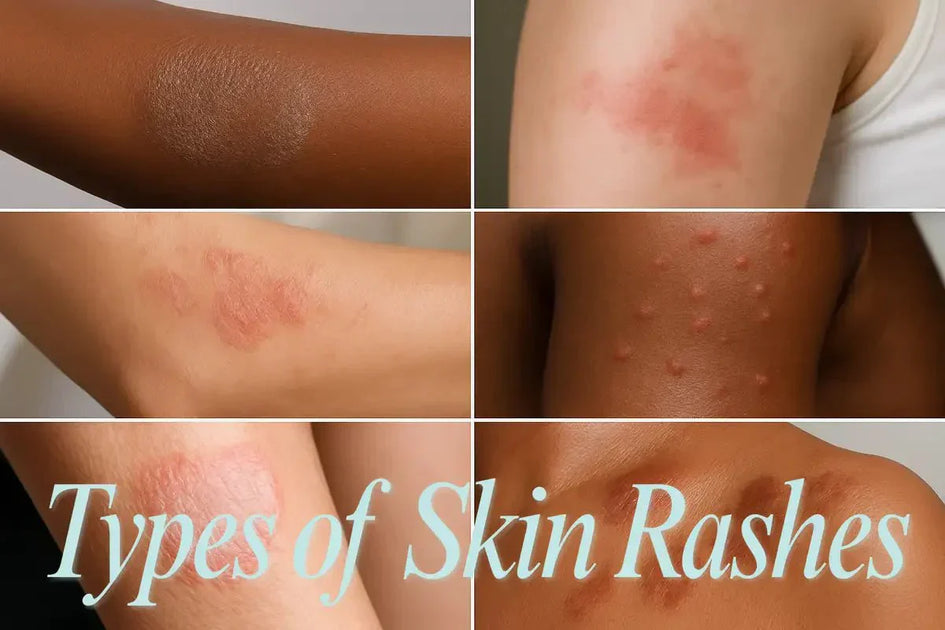
Is a mysterious patch of red, itchy skin making you worried? You're not alone. Skin conditions are one of the most common reasons people see a doctor—in fact, skin diseases rank as the fourth leading cause of nonfatal disease burden worldwide[1]. But here's the good news: understanding what's causing your rash is the first step toward finding relief.
You've likely tried a few things already. Maybe you switched your soap or tried an over-the-counter cream, only for the rash to stick around. It's frustrating when you can't figure out the trigger. Many people struggle to find answers—skin conditions are often underdiagnosed and undertreated for prolonged periods[2]. You know your body best, and you know when something just isn't right. That nagging itch or persistent redness is a sign worth paying attention to.
In this guide, you'll discover how to identify the most common types of skin rashes, from the dry, scaly patches of eczema to the well-defined plaques of psoriasis. We'll explore why some rashes appear suddenly and what triggers them. You'll also get evidence-based information on effective treatments. For instance, did you know that for many inflammatory rashes, the primary goal is restoring the skin's barrier function? Plus, you'll learn when a rash is a sign of something more serious. But first, let's explore what's happening beneath the surface.
Recent research highlights a crucial connection: the health of your skin's microbiome. Studies have found that imbalances in skin bacteria can significantly worsen inflammatory conditions like atopic dermatitis[3]. This offers real hope for new treatment strategies that go beyond just managing symptoms.
Key Takeaways
- Identify the Cause: Rashes are your skin's reaction to triggers. Identifying the cause—from allergies and infections to chronic conditions like eczema—is the first step to effective treatment.
- Eczema vs. Psoriasis: Eczema often appears in body folds with intense itching, while psoriasis typically has well-defined, silvery, scaly patches on elbows and knees.
- When to Worry: A rash with a fever, rapid spreading, blistering, or difficulty breathing requires immediate medical attention.
- Treatment Varies: While gentle skincare is a universal first step, treatments range from over-the-counter creams for mild rashes to prescription medications for chronic conditions.
- You're Not Alone: Atopic dermatitis (eczema) affects over 171 million people globally, with prevalence peaking in childhood at ages 5-9 years[4].
Table of Contents
What is a Skin Rash?
A skin rash, known in medical terms as dermatitis, is any change in your skin's normal appearance or texture. It's a signal from your body that something has irritated the skin or triggered an inflammatory response. Rashes can show up as red patches, raised bumps, blisters, or scaly areas.
🚨 Your Skin's Alarm System
A rash is your skin telling you it has encountered something it doesn't like. Whether it's an external irritant or an internal immune reaction, your body is sending a clear message.
The cause of a rash can be complex. Sometimes the culprit is obvious. Other times, it takes detective work.
In irritant contact dermatitis, the rash is a direct result of chemical damage to the skin's surface[6]. Think of it like a burn from a harsh cleaner. Allergic contact dermatitis is different. It's a delayed immune response. Your body's T-cells learn to see a substance as a threat, then react days later[6]. That delay is what makes allergies so tricky to pin down.
Your Guide to Identifying 35 Common Skin Rashes
🔍 The Most Comprehensive Rash Identification Resource
This guide covers 35+ different types of skin rashes, organized by category to help you quickly identify what you're dealing with.
Before we explore the 10 most common rashes in detail below, here's a comprehensive identification guide. Consider it the most complete resource for understanding different types of rashes. Save it. Bookmark it. You'll want to reference it later.
How to Use This Guide: Find the category that best matches your symptoms (inflammatory, viral, bacterial, fungal, parasitic, or other). Then compare your rash's appearance, location, and features to find the closest match. Remember, this is for educational purposes—always confirm with a healthcare provider.

What makes identifying rashes challenging is that many conditions can look similar at first glance. The tables below organize rashes by their underlying cause, making it easier to narrow down possibilities. Each entry includes the key features that distinguish one rash from another.
Inflammatory Skin Conditions
These rashes don't just appear once and leave. They come back. Again and again. Why? Because your immune system is reacting to triggers, and it has a long memory. Inflammatory rashes affect millions worldwide, and they include some of the most frustrating, persistent skin conditions you'll encounter.
| Rash Type | Appearance | Common Location | Key Features |
|---|---|---|---|
| Atopic Dermatitis (Eczema) | Dry, scaly patches; red on light skin, purple/gray on darker skin | Body folds (elbows, knees), face, hands | Intensely itchy, chronic, often linked to asthma/allergies[5] |
| Contact Dermatitis | Red, inflamed area matching contact pattern; may blister | Anywhere a substance touched the skin | Sharp borders, appears 1-2 days after contact with irritant or allergen |
| Psoriasis | Thick, silvery scales on red/purplish base | Elbows, knees, scalp, lower back, nails | Well-defined borders, may crack and bleed; autoimmune condition[7] |
| Hives (Urticaria) | Raised welts (wheals) that can move around | Anywhere on the body | Individual welts last less than 24 hours, intensely itchy, often allergic |
| Seborrheic Dermatitis | Yellow, greasy scales on red/inflamed skin | Scalp, eyebrows, nasolabial folds, chest | Non-contagious, may be linked to Malassezia yeast overgrowth[8] |
| Rosacea | Persistent facial redness, visible blood vessels, papules | Central face (cheeks, nose, forehead, chin) | Triggers include sun, stress, spicy foods; may have ocular symptoms |
| Perioral Dermatitis | Small red papules around mouth, sparing vermillion border | Around mouth, sometimes nose and eyes | Often triggered by topical steroids or heavy moisturizers |
| Nummular Eczema | Coin-shaped patches of irritated skin | Arms, legs, torso, hands | Very itchy, may ooze and crust; more common in winter |
| Stasis Dermatitis | Red, scaly skin with brown discoloration | Lower legs, ankles | Associated with poor circulation; may develop ulcers[2] |
But what if your rash came with a fever? That's when things get more serious.
Viral Rashes
Viral infections often cause distinctive rashes. Your immune system fights the invading virus, and the rash is part of that battle. You'll usually notice other symptoms too: fever, fatigue, or a stuffy nose.
The good news? Most viral rashes resolve on their own. The not-so-good news? Some require medical attention. Here's how to tell them apart.
| Rash Type | Appearance | Common Location | Key Features |
|---|---|---|---|
| Chickenpox (Varicella) | Itchy blisters in various stages; red spots to crusts | Starts on trunk, spreads to face and limbs | Highly contagious; lesions at different stages simultaneously[9] |
| Shingles (Herpes Zoster) | Painful blisters in a band-like pattern | One side of body, often torso | Reactivation of chickenpox virus; severe pain may persist |
| Measles | Red, blotchy rash starting at hairline | Starts on face, spreads downward | Koplik spots in mouth; high fever; vaccine-preventable[10] |
| Rubella (German Measles) | Pink/red rash, finer than measles | Starts on face, spreads to body | Mild illness but dangerous in pregnancy; vaccine-preventable |
| Hand, Foot & Mouth Disease | Small blisters on red base | Hands, feet, mouth, buttocks | Common in children; caused by coxsackievirus[11] |
| Fifth Disease (Erythema Infectiosum) | "Slapped cheek" appearance, lacy body rash | Cheeks, then arms and trunk | Caused by parvovirus B19; rash may recur with heat/stress |
| Roseola | Pink spots appear after fever breaks | Trunk, then neck and arms | High fever for 3-5 days before rash; common in infants |
| Molluscum Contagiosum | Small, dome-shaped bumps with central dimple | Anywhere, often trunk and extremities | Contagious; spread by direct contact; self-limiting |
| Cold Sores (Herpes Simplex) | Grouped vesicles on red base | Lips, around mouth | Recurrent; triggered by stress, sun, illness |
| Pityriasis Rosea | Herald patch followed by "Christmas tree" pattern | Trunk, upper arms | Self-limiting; may follow viral illness; lasts 6-8 weeks |
Viral rashes usually pass. But some infections need faster action.
📚 Related Resource
Many viral and bacterial rashes can mimic eczema symptoms. Learn how to tell them apart with our guide on identifying common eczema triggers.
Bacterial Skin Infections
Bacterial infections are different. They require prompt treatment with antibiotics. Look for the telltale signs: warmth, swelling, or pus. These rashes can spread quickly. Left untreated, some lead to serious complications.
| Rash Type | Appearance | Common Location | Key Features |
|---|---|---|---|
| Impetigo | Honey-crusted lesions or large blisters | Face, hands, diaper area | Highly contagious; common in children; caused by staph or strep[12] |
| Cellulitis | Red, swollen, warm, tender area | Lower legs most common | Spreads rapidly; may cause fever; requires antibiotics |
| Scarlet Fever | Fine, sandpaper-like rash | Neck, trunk, extremities | Strawberry tongue; follows strep throat; peeling after rash |
| Meningococcal Rash | Purple spots that don't blanch | Anywhere on body | Medical emergency; associated with meningitis |
| Lyme Disease | Expanding "bull's-eye" rash | Site of tick bite | Erythema migrans; may have multiple lesions[13] |
| Folliculitis | Small red bumps around hair follicles | Anywhere with hair follicles | May be bacterial or fungal; "hot tub folliculitis" from Pseudomonas |
| Erysipelas | Bright red, raised, well-demarcated area | Face, legs | Superficial cellulitis; sharp borders; caused by strep |
Now, let's look at infections that love your gym locker.
Fungal Skin Infections
Fungal infections thrive where it's warm and moist. Your armpits. Between your toes. Under skin folds. They're usually not serious, but here's the frustrating part: they can be stubborn to treat.
Most respond well to antifungal medications. Just don't expect overnight results. Treatment often takes several weeks to clear the infection completely.
| Rash Type | Appearance | Common Location | Key Features |
|---|---|---|---|
| Ringworm (Tinea Corporis) | Ring-shaped patches with raised, scaly borders | Body, arms, legs | Central clearing; contagious; not actually a worm[14] |
| Athlete's Foot (Tinea Pedis) | Scaly, cracked skin between toes | Feet, especially between toes | Itchy; worse in warm, moist conditions; Dr. Harlan's treatment guide |
| Jock Itch (Tinea Cruris) | Red, scaly patches in groin area | Groin, inner thighs | More common in males; spreads in warm, moist conditions |
| Tinea Versicolor | Patches lighter or darker than surrounding skin | Trunk, shoulders, neck | Caused by Malassezia; more noticeable after tanning |
| Candidiasis (Yeast) | Red patches with satellite lesions | Skin folds, diaper area | Thrives in warm, moist areas; may have white discharge |
| Tinea Capitis | Scaly patches with hair loss | Scalp | Common in children; may cause kerion (boggy mass) |
| Onychomycosis | Thick, discolored nails | Toenails > fingernails | Difficult to treat; may require oral antifungals |
There's one more category that makes people uncomfortable to discuss.
Parasitic Skin Infections
Parasitic infections come from tiny organisms living on or in your skin. Yes, it sounds unsettling. But these are more common than you'd think, and they're highly contagious.
Treatment requires prescription medications. Here's the important part: everyone in close contact needs treatment too. Otherwise, reinfestation happens. Fast.
| Rash Type | Appearance | Common Location | Key Features |
|---|---|---|---|
| Scabies | Small bumps and burrows, intense night itching | Web spaces, wrists, waistline | Highly contagious; caused by mites; family treatment needed[15] |
| Head Lice | Itchy scalp, visible nits on hair shafts | Scalp, behind ears, nape of neck | Spread by direct contact; not related to hygiene |
| Body Lice | Itchy red bumps, scratch marks | Areas where clothing seams rest | Associated with poor hygiene; can transmit disease |
Finally, some rashes don't fit neatly into the categories above.
Other Common Skin Conditions
Not every rash fits neatly into a box. This category is the "everything else" drawer: heat-triggered bumps, medication reactions, autoimmune mysteries. They're wildly different in origin. But here's the thing: dermatologists see all of them. Regularly.
| Rash Type | Appearance | Common Location | Key Features |
|---|---|---|---|
| Heat Rash (Miliaria) | Clear blisters or red bumps | Skin folds, areas under tight clothing | Blocked sweat ducts; resolves with cooling |
| Drug Rashes | Variable: morbilliform, urticarial, or severe | Often widespread on trunk and limbs | Timing crucial for diagnosis; may be serious (SJS/TEN) |
| Keratosis Pilaris | Small, rough bumps ("chicken skin") | Upper arms, thighs, cheeks | Genetic; worse in winter; improves with moisturizing |
| Vitiligo | White patches with distinct borders | Face, hands, body folds | Autoimmune; loss of melanocytes; may spread |
| Granuloma Annulare | Ring of small, firm bumps | Hands, feet, elbows, knees | Benign; often resolves spontaneously |
Using This Guide Effectively: Many rashes look similar at first glance. Focus on these key differentiators:
- Timing: Sudden onset vs. gradual
- Triggers: Known exposure vs. unexplained
- Pattern: Symmetrical vs. one-sided
- Other symptoms: Fever, pain, or itching
Pro tip: photograph your rash to track changes over time.
This guide covers the most common conditions. But skin is complex. Individual responses vary. What looks like one condition might be another. You might even have multiple conditions at once.
📋 Quick Reference Summary
Save this guide for future reference. With 35+ conditions organized by type, you now have a comprehensive resource for identifying and understanding skin rashes.

A Closer Look at the 10 Most Common Rashes
Now that you've seen the full landscape, let's zoom in. The truth is, most rashes come down to a handful of common culprits. And if you're reading this, there's a good chance one of these ten is what you're dealing with right now.

Eczema (Atopic Dermatitis)
Let's start with one of the most common skin conditions. According to the Global Burden of Disease Study, atopic dermatitis affects over 171 million people worldwide[4]. That's a significant portion of the global population.
For most, it starts early. In fact, among children who develop atopic dermatitis in the first five years of life, about 78% have onset within the first two years[16]. If you've dealt with eczema, you know the drill: it comes and goes, flaring at the worst possible times.
What Does Eczema Look Like?
Eczema is famous for the "itch that rashes." The intense itching often comes first, and the scratching leads to the visible rash[17]. Its appearance can vary:
- On lighter skin: Pink or red, dry, scaly patches.
- On darker skin: The rash may look violet, grayish, or dark brown, and is often noted for its dryness and texture changes[17].

It commonly affects the crooks of the elbows and knees, the face, and the hands. For more detailed information about managing eczema in colder months, check out our guide on winter and atopic dermatitis.
Gentle Alternative: Some newer formulations, like SmartLotion®, combine low-dose hydrocortisone with prebiotics to address both inflammation and skin microbiome health. Research shows this dual approach can be safe and effective for long-term management.
Contact Dermatitis
Contact dermatitis occurs when your skin reacts to something it touches. It's incredibly common, accounting for up to 95% of all occupational skin diseases[18].
1-2 Days
Typical time for a contact dermatitis rash to appear after exposure[6].
There are two main types:
- Irritant Contact Dermatitis (ICD): This is caused by direct damage to the skin from substances like soaps, detergents, or solvents. It's not an allergic reaction[6].
- Allergic Contact Dermatitis (ACD): This is a true allergic reaction. Common triggers include nickel in jewelry, fragrances, and preservatives in skincare products. Poison ivy is a classic example: exposure to the urushiol oil causes allergic reactions in sensitive individuals[6].
The rash is typically confined to the area of contact and usually resolves within a couple of weeks once the trigger is removed.

Psoriasis
Psoriasis isn't just a rash. It's an autoimmune condition. Your body makes new skin cells too quickly, and they pile up into thick, scaly patches. About 3% of the U.S. population lives with it[19].
The most common form? Plaque psoriasis. It affects 80-90% of patients and appears as raised plaques with silvery-white scales[7].
Here's something many people don't realize: up to 30% of people with psoriasis also develop psoriatic arthritis[19]. That means joint pain and swelling on top of the skin symptoms. Understanding the difference between psoriasis and eczema matters for getting the right treatment. For mild plaque psoriasis, Dr. Harlan's psoriasis protocol outlines a gentle, long-term approach.
Hives (Urticaria)
One day your skin is fine. The next, you're covered in raised, itchy welts. Sound familiar? You're not alone. Hives affect approximately one-quarter of the population at some point in their lifetime[20].
Here's the strange thing about hives: individual welts usually disappear within 24 hours. But new ones can form, making it seem like they never go away[20].
Hives lasting under six weeks are "acute." Anything longer is chronic. And chronic cases? They're frustrating. In chronic spontaneous urticaria, a search for an external cause is often fruitless, as the underlying abnormality is intrinsic[21]. That's the reality many people face. For a deeper understanding of this condition, see our comprehensive guide on what hives are and how to manage them.
Viral Rashes
Viral exanthems show up when your body fights off an infection. The rash is actually a sign your immune system is working.
Common examples include measles, chickenpox, and hand, foot, and mouth disease. Then there's shingles, a painful, blistering rash that happens when the chickenpox virus reactivates years later[22].
The telltale sign of a viral rash? It usually comes with company. Expect fever, body aches, or fatigue alongside the skin symptoms.
Seborrheic Dermatitis
You might know this one by its nickname: dandruff. Seborrheic dermatitis affects the oily areas of your body. Think scalp, eyebrows, and the sides of your nose.
It's surprisingly common. About 3% to 5% of people have it[23]. There are two peak times: infancy (when it's called "cradle cap") and ages 30 to 60[23].
What Does Seborrheic Dermatitis Look Like?
The condition presents differently depending on age and skin tone:
- In adults: Yellow, greasy scales on red or inflamed skin, typically on the scalp, eyebrows, nasolabial folds, and chest
- In infants: Thick, crusty, yellow scales on the scalp (cradle cap)
- On darker skin: May appear as lighter or darker patches with less visible redness[24]
Did You Know? Unlike many rashes, seborrheic dermatitis is not contagious. It's believed to be related to an overgrowth of Malassezia yeast that naturally lives on the skin, combined with genetic and environmental factors[23].

Common triggers include stress, cold weather, hormonal changes, and certain medical conditions like Parkinson's disease or HIV[24]. Treatment typically involves antifungal shampoos, topical corticosteroids, or calcineurin inhibitors. Learn more about managing this condition with our guide on seborrheic dermatitis causes and treatment.
Rosacea
Do you blush easily? Does your face stay red long after everyone else's has calmed down? That persistent redness might be rosacea.
Over 16 million Americans have it, though many don't realize it[25]. It's most common in fair-skinned people between 30 and 50[26]. Women get diagnosed more often than men[26].
📚 Related Resource
Wondering if you have rosacea or something else? Our in-depth guide on using eczema products for rosacea explains the key differences and treatment considerations.
Commonly Misdiagnosed: Rosacea is often mistaken for acne, eczema, or even just a tendency to blush easily. But it's a distinct condition. Without proper treatment, it can progress and worsen over time. That's why getting the right diagnosis matters.
Types and Symptoms of Rosacea
Rosacea can present in several ways:
- Erythematotelangiectatic: Persistent facial redness, visible blood vessels, flushing
- Papulopustular: Redness with acne-like breakouts
- Phymatous: Skin thickening, most commonly on the nose (rhinophyma)
- Ocular: Eye irritation, redness, and dryness[27]
30 minutes
How quickly prescription medications like brimonidine can begin to fade rosacea redness[28].
The trigger list reads like a "fun things to avoid" checklist: sun exposure, hot drinks, spicy foods, alcohol, extreme temperatures, stress, and certain skincare products. There's no cure. But don't let that discourage you. Treatments like topical medications, oral antibiotics, laser therapy, and lifestyle modifications can effectively manage symptoms. Many people with rosacea live relatively symptom-free once they find the right approach.
Fungal Skin Infections
Fungal infections are everywhere. Literally. They're among the most common skin conditions worldwide. Here's a number that might surprise you: there are an estimated 650 million fungal skin infections globally[29]. Cutaneous fungal infections affect an estimated 20–25% of the global population, with dermatophytes (ringworm fungi) being the primary pathogenic agents[30].
Common Types of Fungal Infections
Despite its name, ringworm (tinea) isn't caused by worms but by dermatophyte fungi:
- Tinea corporis (body ringworm): Ring-shaped, scaly patches with raised borders
- Tinea pedis (athlete's foot): Itching, burning, and scaling between toes
- Tinea cruris (jock itch): Red, itchy rash in the groin area
- Tinea capitis (scalp ringworm): Scaly patches with hair loss, mainly in children[31]
Fungal infections thrive in warm, moist environments and can spread through direct contact with infected people, animals, or contaminated surfaces. In some countries, nearly 30% of schoolchildren have scalp ringworm infections[32]. Treatment typically involves topical antifungal medications, though oral medications may be needed for scalp or nail infections.
Heat Rash (Miliaria)
Think heat rash is just for babies? Think again. Up to 30% of adults get it in hot, humid conditions[33].
Heat rash happens when sweat ducts get blocked. The perspiration has nowhere to go, so it gets trapped under your skin. The result? Those telltale little bumps.
Types of Heat Rash
Heat rash severity depends on how deeply the sweat ducts are blocked:
- Miliaria crystallina: Clear, fluid-filled blisters that break easily (most superficial)
- Miliaria rubra (prickly heat): Red bumps with intense itching and prickling sensation
- Miliaria profunda: Deep, flesh-colored lumps (least common)[33]
Prevention Tip: Heat rash typically resolves within 24 hours of cooling down. Prevent it by wearing loose, breathable clothing, staying in cool environments, and avoiding heavy creams that can block pores[34].
Heat rash is most common in skin folds and areas where clothing creates friction. In infants, it often appears on the neck, shoulders, and chest. While usually harmless, extensive heat rash can interfere with the body's ability to cool itself, potentially leading to heat exhaustion. For persistent cases, Dr. Harlan's heat rash treatment protocol offers a targeted approach.
Drug-Induced Rashes
Started a new medication recently? That might explain your rash. Drug reactions affect up to 2-3% of hospitalized patients[35].
Here's the tricky part: these reactions range from mild redness to life-threatening conditions. Knowing the difference matters.
Common Types of Drug Reactions
Drug rashes can take many forms:
- Morbilliform eruption: Most common type, resembling measles with widespread red spots
- Urticarial reaction: Hives that appear within hours of taking medication
- Fixed drug eruption: Dark patches that recur in the same location with each exposure
- Stevens-Johnson syndrome: Rare but serious reaction with blistering and skin peeling[36]
💊 Most Common Culprits
Antibiotics, anti-seizure drugs, and NSAIDs cause the most drug rashes. Always tell your doctor about skin changes after starting any new medication.
Timing varies. Most drug rashes appear within 1-2 weeks of starting a new medication[37]. But some show up within hours. Others take months.
If you suspect a drug reaction, don't stop your medication on your own. Talk to your healthcare provider first. They can determine if it's safe to discontinue and suggest alternatives.
📚 Related Resource
Drug rashes can sometimes trigger or worsen existing skin conditions. Explore our comprehensive guide on atopic dermatitis treatments for managing flare-ups from any cause.
Finding the Right Rash Treatment
So you've identified your rash. Now comes the real question: how do you get rid of it? Treatment depends entirely on the cause. But here's the encouraging part: some principles work for almost everyone, regardless of what type of rash you're dealing with.
Gentle Skin Care is Key
Start by being kind to your skin. Use mild, soap-free cleansers. Stick to lukewarm water. After washing, pat dry gently. Never rub.
It's also smart to hit pause on anything new. New cosmetics, lotions, or detergents could be making things worse.
If you're dealing with a persistent issue, finding a well-formulated eczema cream can be a game-changer for restoring comfort and health to your skin. For specific guidance on managing eczema triggers, visit our comprehensive guide on identifying eczema triggers.
Over-the-Counter and Prescription Options
For mild rashes, over-the-counter 1% hydrocortisone cream can soothe inflammation. For chronic conditions like psoriasis or severe eczema, a doctor might prescribe stronger topical steroids, other non-steroidal creams, light therapy, or even systemic medications like biologics for the most severe cases. Our guide on atopic dermatitis treatments explores these options in depth.
Targeted Treatments by Rash Type
Different rashes require different approaches:
- Seborrheic dermatitis: Antifungal shampoos (ketoconazole, selenium sulfide), topical antifungals, or mild corticosteroids
- Rosacea: Topical metronidazole or azelaic acid, oral antibiotics, laser therapy for visible blood vessels
- Fungal infections: Topical antifungals (clotrimazole, terbinafine) for 2-4 weeks; oral antifungals for scalp or nail involvement
- Heat rash: Cool compresses, calamine lotion, staying in air-conditioned environments
- Drug rashes: Discontinuing the offending medication (with doctor's guidance), antihistamines, corticosteroids for severe reactions
For those managing chronic inflammatory skin conditions, a well-formulated eczema cream can make a significant difference. SmartLotion® offers a unique approach for conditions like eczema, psoriasis, and seborrheic dermatitis, providing long-lasting relief without the side effects associated with long-term steroid use. Its patented formula helps restore the skin's natural barrier while calming inflammation.
When to See a Dermatologist
Here's the honest truth: most rashes aren't emergencies. You can often manage them at home. But some are serious. And knowing the difference? That could literally save your life.

⚠️ Seek immediate medical attention if a rash is accompanied by fever, difficulty breathing, widespread blistering, or if it looks like bruises (non-blanching).
You should schedule an appointment with a provider if:
- The rash is not improving after a week of home care.
- It is spreading or becoming more painful.
- It is interfering with your sleep or daily activities.
- You suspect a chronic condition like psoriasis or eczema.
Taking Control of Your Skin Health
If there's one thing to take away from this guide, it's this: you're not alone. Millions deal with eczema[4]. One in five will get hives at some point[20]. Skin rashes are a shared human experience, and that frustration you feel? It's valid.
We've covered a lot of ground here. Ten major rash types. Dozens of conditions. Each with its own triggers, symptoms, and treatments. It can feel overwhelming. But knowledge is power.
Some rashes respond quickly to treatment. Seborrheic dermatitis and fungal infections often clear with antifungal products. Others, like rosacea, need a mix of medication and lifestyle changes. And chronic conditions like eczema and psoriasis? They require ongoing management. But modern treatments offer real hope for improvement.
Prevention matters too. Simple steps can reduce flare-ups:
- Identify and avoid your triggers
- Maintain good skin hygiene
- Wear breathable clothing
- Manage stress
Consider keeping a symptom diary. It helps you spot patterns you might otherwise miss. Our skin health blog offers more tips for managing various conditions.
One important reminder: this guide is for information, not diagnosis. If your rash persists or concerns you, see a dermatologist. They can confirm what you're dealing with and create a treatment plan that works.
The right approach might be an effective eczema cream. It might be identifying a hidden allergen. Or it might be managing a chronic condition with the right support.
Your skin is your body's largest organ. Its first line of defense. And it deserves your attention. Don't let rashes run your life. With the knowledge you've gained here, proper treatment, and professional guidance when needed, healthier skin is absolutely within reach. You've got this.
References
- Karimkhani C, Dellavalle RP, Coffeng LE, et al. Global Skin Disease Morbidity and Mortality: An Update From the Global Burden of Disease Study 2013. JAMA Dermatol. 2017;153(5):406-412. doi:10.1001/jamadermatol.2016.5538
- Yosipovitch G, Nedorost ST, Silverberg JI, Friedman AJ, Canosa JM, Cha A. Stasis Dermatitis: An Overview of Its Clinical Presentation, Pathogenesis, and Management. Am J Clin Dermatol. 2023;24(2):275-286. doi:10.1007/s40257-022-00753-5
- Fyhrquist N, Muirhead G, Prast-Nielsen S, et al. Microbe-host interplay in atopic dermatitis and psoriasis. Nat Commun. 2019;10:4703. doi:10.1038/s41467-019-12253-y
- Shin YH, Hwang J, Kwon R, et al. Global, regional, and national burden of allergic disorders and their risk factors in 204 countries and territories, from 1990 to 2019: A systematic analysis for the Global Burden of Disease Study 2019. Allergy. 2023;78(8):2232-2254. doi:10.1111/all.15807
- Hill DA, Spergel JM. The atopic march: Critical evidence and clinical relevance. Ann Allergy Asthma Immunol. 2018;120(2):131-137. doi:10.1016/j.anai.2017.10.037
- Novak-Bilić G, Vučić M, Japundžić I, et al. Irritant and Allergic Contact Dermatitis – Skin Lesion Characteristics. Acta Clin Croat. 2018;57(4):713-720. doi:10.20471/acc.2018.57.04.13
- Chakith MR, Pradeep S, Gangadhar M, et al. Advancements in understanding and treating psoriasis: a comprehensive review of pathophysiology, diagnosis, and therapeutic approaches. PeerJ. 2025;13:e19325. doi:10.7717/peerj.19325
- Borda LJ, Wikramanayake TC. Seborrheic Dermatitis and Dandruff: A Comprehensive Review. J Clin Investig Dermatol. 2015;3(2):10. doi:10.13188/2373-1044.1000019
- Leung J, McCollum AM, Radford K, et al. Varicella in Tshuapa Province, Democratic Republic of Congo, 2009-2014. Trop Med Int Health. 2019;24(7):839-848. doi:10.1111/tmi.13243
- Moss WJ. Measles. Lancet. 2017;390(10111):2490-2502. doi:10.1016/S0140-6736(17)31463-0
- Zhang Y. Epidemics of Hand, Foot, and Mouth Disease. In: Molecular Biology of Hand-Foot-Mouth Diseases. Springer, Singapore; 2024:1-27. doi:10.1007/978-981-99-9660-5_1
- Miller KM, Carapetis JR, Cherian T, et al. Standardization of Epidemiological Surveillance of Group A Streptococcal Impetigo. Open Forum Infect Dis. 2022;9(Suppl 1):S15-S24. doi:10.1093/ofid/ofac249
- Steere AC, Strle F, Wormser GP, et al. Lyme borreliosis. Nat Rev Dis Primers. 2016;2:16090. doi:10.1038/nrdp.2016.90
- Deng R, Wang X, Li R. Dermatophyte infection: from fungal pathogenicity to host immune responses. Front Immunol. 2023;14:1285887. doi:10.3389/fimmu.2023.1285887
- Uzun S, Durdu M, Yürekli A, et al. Clinical practice guidelines for the diagnosis and treatment of scabies. Int J Dermatol. 2024;63(12):1642-1656. doi:10.1111/ijd.17327
- Hung CW, Roll S, Icke K, et al. Incidence and Remission of Atopic Dermatitis in a German Birth Cohort. JAMA Netw Open. 2025;8(12):e2544324. doi:10.1001/jamanetworkopen.2025.44324
- Bissonnette R, Jankicevic J, Saint-Cyr Proulx E, Maari C. Ethnicity, Race and Skin Color: Challenges and Opportunities for Atopic Dermatitis Clinical Trials. J Clin Med. 2023;12(11):3805. doi:10.3390/jcm12113805
- Srinivas CR, Sethy M. Occupational Dermatoses. Indian Dermatol Online J. 2023;14(1):21-31. doi:10.4103/idoj.idoj_332_22
- Armstrong AW, Mehta MD, Schupp CW, Gondo GC, Bell SJ, Griffiths CEM. Psoriasis Prevalence in Adults in the United States. JAMA Dermatol. 2021;157(8):940-946. doi:10.1001/jamadermatol.2021.2007
- Sekerel BE, Ilgun Gurel D, Sahiner UM, Soyer O, Kocaturk E. The many faces of pediatric urticaria. Front Allergy. 2023;4:1267663. doi:10.3389/falgy.2023.1267663
- Saini SS, Kaplan AP. Chronic Spontaneous Urticaria: The Devil's Itch. J Allergy Clin Immunol Pract. 2018;6(4):1097-1106. doi:10.1016/j.jaip.2018.04.013
- Gershon AA, Breuer J, Cohen JI, et al. Varicella zoster virus infection. Nat Rev Dis Primers. 2015;1:15016. doi:10.1038/nrdp.2015.16
- Dall'Oglio F, Nasca MR, Gerbino C, Micali G. An Overview of the Diagnosis and Management of Seborrheic Dermatitis. Clin Cosmet Investig Dermatol. 2022;15:1537-1548. doi:10.2147/ccid.s284671
- Hay RJ. Malassezia, dandruff and seborrhoeic dermatitis: an overview. Br J Dermatol. 2011;165 Suppl 2:2-8. doi:10.1111/j.1365-2133.2011.10570.x
- Van Onselen J. Rosacea: symptoms and support. Br J Nurs. 2012;21(21):1252-1255. doi:10.12968/bjon.2012.21.21.1252
- Rainer BM, Kang S, Chien AL. Rosacea: Epidemiology, pathogenesis, and treatment. Dermatoendocrinol. 2017;9(1):e1361574. doi:10.1080/19381980.2017.1361574
- van Zuuren EJ. Rosacea. J Dtsch Dermatol Ges. 2017;15(10):1013-1026. doi:10.1111/ddg.13333
- Jackson JM, Knuckles M, Minni JP, Johnson SM, Belasco KT. The role of brimonidine tartrate gel in the treatment of rosacea. Clin Cosmet Investig Dermatol. 2015;8:529-538. doi:10.2147/CCID.S58920
- Reddy KR. Fungal Infections (Mycoses): Dermatophytoses (Tinea, Ringworm). J Gandaki Med Coll Nepal. 2017;10(1):43-48. doi:10.3126/jgmcn.v10i1.17901
- Chanyachailert P, Leeyaphan C, Bunyaratavej S. Cutaneous Fungal Infections Caused by Dermatophytes and Non-Dermatophytes: An Updated Comprehensive Review of Epidemiology, Clinical Presentations, and Diagnostic Testing. J Fungi (Basel). 2023;9(6):669. doi:10.3390/jof9060669
- Leung AKC, Lam JM, Leong KF, Hon KL. Tinea corporis: an updated review. Drugs Context. 2020;9:2020-5-6. doi:10.7573/dic.2020-5-6
- Birhanu MY, Temesgen H, Ketema DB, et al. Tinea capitis among schoolchildren in Ethiopia: A systematic review and meta analysis. PLoS One. 2023;18(2):e0280948. doi:10.1371/journal.pone.0280948
- Loo M. Heat Rash. In: Integrative Medicine for Children. Elsevier; 2009:363. doi:10.1016/b978-141602299-2.10040-4
- Hall JC. Principles of Diagnosis of Cutaneous Drug Eruptions. In: Cutaneous Drug Eruptions. Springer, London; 2015:13-16. doi:10.1007/978-1-4471-6729-7
- Bernard LA, Eichenfield LF. Drug-Associated Rashes. In: Comprehensive Pediatric Hospital Medicine. Elsevier; 2007:1005-1011. doi:10.1016/b978-032303004-5.50163-0
- Atherton DJ. Topical corticosteroids in atopic dermatitis. BMJ. 2003;327(7421):942-943. doi:10.1136/bmj.327.7421.942
- Chu MT, Chang WC, Pao SC, Hung SI. Delayed Drug Hypersensitivity Reactions: Molecular Recognition, Genetic Susceptibility, and Immune Mediators. Biomedicines. 2023;11(1):177. doi:10.3390/biomedicines11010177