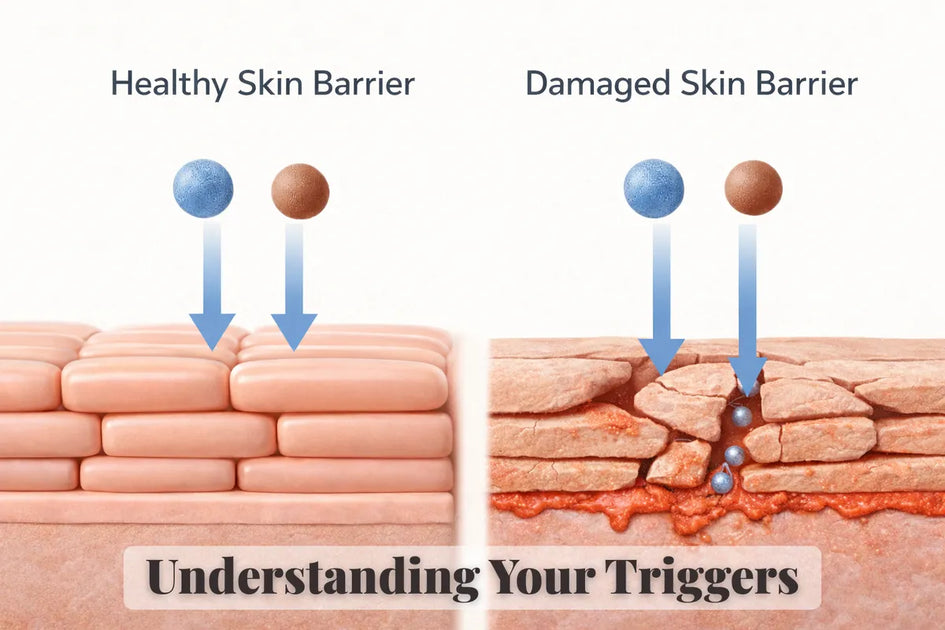
Nearly half of people with moderate to severe eczema struggle to control their symptoms despite treatment. When external treatments alone fall short[1], and even advanced therapies like dupilumab leave more than 60% of users without clear skin after 16 weeks[2], the missing piece might not be a stronger medication. It might be understanding what triggers your flare-ups in the first place.
You know the cycle all too well. Your skin finally calms down. Then without warning, the itching returns. The redness spreads. Sleep becomes impossible. What went wrong? Research confirms that patients who identify their personal triggers experience better symptom management[3]. But here is the challenge: triggers vary dramatically from person to person. What causes a severe flare for you might have no effect on someone else.
This guide breaks down the science behind eczema flare-ups. We cover the seven major trigger categories identified by research: from skin barrier defects and immune dysfunction to the bacteria living on your skin. Along the way, you will find practical strategies for identifying your personal triggers and preventing future outbreaks. Every fact comes from peer-reviewed medical research. No empty promises, just evidence-based answers.
Research Update: A landmark NIH study found that effective treatment restores a healthy mix of skin bacteria, and this shift matches visible skin improvement. During flares, harmful bacteria take over while beneficial species decline. Treatment reverses this pattern[4]. The takeaway: managing your skin bacteria matters as much as the treatments you choose.
Key Takeaways
- Skin barrier dysfunction is the foundation - Genetic mutations and environmental damage allow irritants and allergens to penetrate your skin
- Stress directly affects your skin - Chronic stress alters cortisol levels and shifts immune responses toward inflammation
- Your skin's bacteria matter - Up to 90% of eczema patients carry a harmful bacterium (S. aureus) that multiplies during flares[24]
- Food triggers affect 20-30% of cases[17] - Milk, eggs, and soy are the most common culprits, especially in young children[18]
- Environmental factors are modifiable - Dust mites, weather changes, and harsh products can be controlled with the right strategies
Table of Contents
What Causes Eczema Flare-Ups?
Eczema flare-ups occur when your skin's protective barrier fails and your immune system overreacts to triggers that would not bother healthy skin. This creates a cycle of inflammation, itching, and damage that feeds on itself[5].
The causes fall into two main categories. Internal factors include your genetics, immune system dysfunction, and the balance of bacteria living on your skin. External factors include allergens, irritants, weather conditions, and psychological stress. Most flare-ups result from several of these factors colliding at once, which is why understanding the root causes of atopic dermatitis helps you target the right triggers. Our dedicated eczema triggers guide maps each external category in detail, from allergens and chemicals to stress and climate.

You are far from alone in this struggle. In Europe and the USA, atopic dermatitis affects about 20% of children and 7-14% of adults[6]. Rates vary by country but have been climbing steadily, especially in developed nations[7]. Understanding why flares happen gives you power to prevent them.
Skin Barrier Dysfunction: The Foundation of Flares
Your skin barrier is the first line of defense. When it works properly, it keeps moisture in and irritants out. In eczema, this barrier has fundamental weaknesses that make flare-ups almost inevitable without proper management.
The Filaggrin Connection
Filaggrin is a protein that acts like mortar between the bricks of your outer skin layer. It helps your skin retain water and maintain its protective function. When the gene for filaggrin is faulty, your skin cannot build this mortar properly. These filaggrin mutations are the strongest known genetic risk factor for eczema[8].
These mutations affect how your skin holds moisture. Studies show that people with filaggrin mutations have:
- Faster moisture loss through the skin
- Higher skin pH levels, which disrupts the barrier
- Greater susceptibility to allergen penetration[9]
But filaggrin mutations are not the whole story. Even patients without these mutations can have reduced filaggrin levels. Why? Because inflammation itself suppresses filaggrin production[10]. Certain inflammatory signals that run high in eczema actively shut down your skin's ability to make this protective protein. It becomes a vicious cycle: inflammation weakens your barrier, and a weak barrier invites more inflammation.
Up to 50%
of people with moderate to severe eczema carry filaggrin gene mutations[8]
How Barrier Breakdown Triggers Inflammation
When your skin barrier fails, a cascade of events follows. Allergens and irritants penetrate through the weakened outer layer. Your immune system detects these invaders and launches an inflammatory response. This inflammation further damages the barrier, allowing more irritants through[11].
Researchers call this the "outside-inside" hypothesis: the problem starts at the surface and works inward[9]. A weak barrier lets irritants through. Irritants trigger inflammation. Inflammation damages the barrier further. Round and round it goes.
This theory has strong evidence behind it. Studies have found that newborns whose skin loses moisture faster are more likely to develop eczema within their first year of life[11].
📚 Related Resource
For deeper insights on protecting your skin barrier, see our guide: How Do Moisturizers Work? Your Guide to Ingredients
Environmental Triggers That Spark Flares
Your surroundings play a major role in eczema control. Weather conditions, humidity levels, and temperature changes can all trigger flares or make existing symptoms worse.
Low humidity poses a significant threat to eczema-prone skin. Dry air pulls moisture from your already compromised skin barrier, leading to increased cracking and irritation. A large US study found that eczema prevalence reaches 13.6% in the driest regions compared to just 11.2% in the most humid areas[12]. Indoor air quality matters too, and air pollution can double your risk of flares.
Temperature and climate affect your skin in measurable ways:
- Cold temperatures and increased indoor heating are associated with higher eczema prevalence
- Heat can cause sweating, which may irritate inflamed skin in some individuals
- Living in regions with higher mean annual temperatures is associated with lower eczema prevalence[12]

Your eczema likely follows seasonal patterns. Many people experience worse symptoms in winter when indoor heating dries the air. Others flare during spring pollen season or summer heat. Tracking your symptoms alongside weather changes can reveal your personal patterns.
Clinical Pearl: Research found that states with the highest annual temperatures had 14.8% lower eczema prevalence compared to the coldest states. Similarly, areas with the highest humidity had 17.6% lower prevalence than the driest regions. Indoor heating was associated with higher eczema rates, likely due to reduced indoor humidity[12].
Allergens: Indoor and Outdoor Culprits
For many people with eczema, certain substances set off the immune system like a false alarm. Dust mites, pollen, pet dander, and mold spores are common culprits. When these allergens slip through your compromised skin barrier, your immune cells treat them as threats and release inflammatory chemicals in response.
House dust mites deserve special attention. These microscopic creatures are among the most common indoor allergens affecting eczema patients. Among those sensitized to dust mites, 70-100% show antibody reactivity to major mite allergens[13].
The allergens come primarily from mite droppings, which contain proteins that trigger immune reactions. Up to one-third of sensitized patients report worsening eczema or breathing problems after dust exposure[13].
Dust mites thrive in bedding, upholstered furniture, and carpets, where they feed on shed human skin cells. Reducing exposure requires consistent effort:
- Use allergen-proof mattress and pillow covers
- Wash bedding weekly in hot water (at least 130°F/54°C)
- Maintain humidity below 50% to discourage mite growth
- Consider removing carpets from bedrooms[14]
Pollen and other outdoor allergens also play a role. About 36% of children with difficult-to-treat eczema experience flares during pollen season[15]. Those sensitized to pollen are significantly more likely to notice seasonal worsening. Grass and tree pollens rank among the most common outdoor triggers.
Pet dander presents challenges for animal-loving eczema patients. Cats spread their main allergen (Fel d 1) onto fur when they groom themselves[26]. Complete avoidance is most effective, but keeping pets out of bedrooms and using air purifiers can help reduce exposure.
Irritants in Daily Products
Unlike allergens, irritants damage your skin directly without involving the immune system. They strip away protective oils and disrupt the skin barrier. Common irritants include soaps, detergents, fragrances, and certain fabrics.
Surfactants in cleansers deserve particular attention. These chemicals remove oils from your skin to create that "squeaky clean" feeling. The problem? They also strip away the natural lipids that hold your skin barrier together[16]. Every time you wash with harsh soap, you weaken your first line of defense.
| Irritant Category | Examples | How It Triggers Flares |
|---|---|---|
| Cleansers | Soap, body wash, dish soap | Strips protective skin lipids |
| Laundry Products | Detergents, fabric softeners | Residue remains on clothing |
| Fragrances | Perfumes, scented lotions | Chemical irritation and allergy |
| Fabrics | Wool, synthetic materials | Physical friction and heat retention |
Laundry detergent residue on clothing is an often-overlooked trigger. The chemicals that remain in fabric after washing come into direct contact with your skin all day long. Using fragrance-free, dye-free detergents and running an extra rinse cycle can help.
Fragrances rank among the most frequent contact allergens, along with metals and preservatives[27]. Many products marketed as "gentle" still contain fragrances that irritate sensitive skin. Knowing the worst ingredients for eczema helps you read labels effectively.
Look for products specifically formulated for eczema-prone skin. A well-designed eczema cream should contain ingredients that support rather than damage your skin barrier.
Food Triggers and Eczema
The relationship between food and eczema is complex and often misunderstood. Food allergies can trigger eczema flares, but not everyone with eczema has food triggers. Research indicates that food allergy is more common in children with atopic dermatitis: approximately 30% of them are affected compared with 4% to 10% in the general pediatric population[17].
The most common food triggers in children with atopic dermatitis include:
- Egg white (39% of sensitized patients)
- Egg yolk (31%)
- Cow's milk (13%)
- Wheat flour (5%)
- Peanuts[18]
Food reactions in eczema differ from typical food allergies. Instead of immediate hives or throat swelling, eczema reactions often appear delayed. Symptoms typically show up 2 to 6 hours after eating the trigger food[17]. This delay makes pinpointing the culprit much harder.
51.9%
of children with atopic dermatitis showed hypersensitivity to at least one food allergen[18]
Age matters significantly. Food triggers are most common in infants and young children under five years old. Many children outgrow their food allergies as their immune systems mature. Allergies to milk, egg, wheat, and soy often resolve by school age, while peanut and tree nut allergies tend to persist longer[19].
Testing for food allergies requires professional guidance. Skin prick tests and blood tests can identify sensitivities, but a positive result does not always mean the food triggers your eczema. The good news: negative results are highly reliable. With a 90-95% negative predictive value, a negative test confidently rules out that food as a trigger[17].
Elimination diets should be approached carefully. Removing foods without proper testing can lead to nutritional deficiencies, especially in growing children. Work with a healthcare provider or allergist before making major dietary changes.
📚 Related Resource
Learn more about the food-eczema connection: Diet and Eczema: 7 Science-Backed Ways to Reduce Flares
Stress and Your Skin
You already suspected it. Now research confirms it: stress makes eczema worse. In one focus group study, all 28 patients with atopic dermatitis confirmed that stress worsened their symptoms[3]. The connection runs deeper than you might expect.
Your brain and skin share a direct phone line. When you feel stressed, your brain sends signals through what scientists call the HPA axis[20]. These signals trigger the release of stress hormones that travel straight to your skin. The result? More inflammation and a weaker barrier.
Acute stress causes a rapid spike in cortisol. This triggers your immune system to release inflammatory chemicals called cytokines[20]. The result is a quick inflammatory response that can worsen eczema symptoms within hours.
Chronic stress creates a different problem entirely. When stress persists, something counterintuitive happens: the body stops producing enough cortisol[21]. Both children and adults with eczema show this blunted response compared to people without the condition[22]. Without adequate cortisol to rein in inflammation, the immune system tilts toward even more inflammation.

The stress-eczema relationship goes both ways. Having eczema causes stress. Visible symptoms draw unwanted attention. Nighttime itching steals sleep. Social situations feel harder. Studies confirm what you might already feel: eczema is linked to higher rates of anxiety and depression, and the worse your symptoms, the greater the emotional toll[23].
Managing stress can improve your skin. Research supports these approaches:
- Regular physical exercise (shown to reduce eczema-related stress)
- Adequate sleep
- Cognitive behavioral therapy
- Mindfulness and relaxation techniques[3]
Your Skin's Microbiome Balance
Your skin hosts trillions of bacteria, fungi, and viruses that make up the skin microbiome. In healthy skin, these microorganisms exist in balance. In eczema, this balance tips toward disease-causing bacteria, particularly Staphylococcus aureus. Learning how the microbiome impacts eczema reveals why some treatments work better than others.
Research has found that up to 90% of people with atopic dermatitis carry S. aureus on their skin[24]. This bacterium lives on both eczema patches and normal-looking skin. The relationship between S. aureus and eczema flares is now well-established.
Research Finding: Studies show that the proportion of S. aureus on the skin increases significantly during eczema flares and correlates directly with disease severity. As symptoms improve with treatment, S. aureus levels decrease[4].

S. aureus wages a three-front war on your skin:
- It produces toxins that trigger immune responses
- It builds protective biofilms that resist treatment
- It crowds out beneficial bacteria that would normally help protect you[25]
The diversity of your skin bacteria also matters. Healthy skin has many different bacterial species living together. Eczema-prone skin shows reduced diversity, with S. aureus crowding out the helpful bacteria that normally keep your skin healthy[4].
Treatment approaches that address the microbiome are gaining attention. Some newer formulations, like SmartLotion, combine anti-inflammatory ingredients with components that support a healthier bacterial balance. This dual approach targets both the inflammation and the microbial imbalance that contribute to flares. For those seeking structured guidance, Dr. Harlan has developed specific treatment protocols for atopic dermatitis.
Identifying Your Personal Triggers
Finding your specific triggers requires detective work. What causes severe flares in one person may have no effect on another, which is why generic advice only gets you so far.
Keep a symptom diary. Track your daily activities, exposures, foods, stress levels, and skin symptoms. Over time, patterns often emerge. Note when flares start, how severe they become, and what you were doing in the 24-48 hours before symptoms appeared.
Look for these common trigger categories:
- New products (skincare, laundry, cleaning supplies)
- Environmental changes (weather, travel, humidity)
- Foods eaten within 6-48 hours of a flare
- Stressful events or periods
- Illness or infections
- Hormonal changes (menstrual cycle, pregnancy)
Beyond triggers, certain bad habits can make eczema worse without you realizing it.
Think you have found a trigger? Test it systematically. Remove the suspected trigger completely for 2-4 weeks while keeping everything else the same. If your skin improves, carefully bring it back and watch what happens. This simple process turns guesses into answers.
Week 1-2: Track Baseline
Record your normal routine and symptoms without making changes
Week 3-4: Eliminate Suspect Trigger
Remove one suspected trigger completely while maintaining your diary
Week 5-6: Reintroduce and Observe
Bring back the trigger and watch for symptom changes within 48 hours
Week 7+: Confirm and Adjust
Repeat process for other suspected triggers, one at a time

Professional allergy testing can pinpoint specific sensitivities. Skin prick tests and blood tests detect allergic reactions to common allergens, while patch testing catches contact allergens that cause delayed reactions. Keep in mind: a positive test does not always mean the substance triggers your eczema[13]. Testing identifies sensitivity, not necessarily a real-world trigger.
Building an effective skincare routine matters as much as avoiding triggers. Using a gentle, effective eczema cream consistently helps maintain your skin barrier and reduces sensitivity to triggers you cannot avoid completely.
When to See a Doctor
Managing eczema at home works for many people, but certain situations call for professional medical attention. Recognizing these warning signs early can prevent complications and get you effective treatment faster.
See a doctor promptly if you experience:
- Signs of skin infection (increased redness, warmth, pus, fever)
- Eczema that does not respond to over-the-counter treatments after 2-3 weeks
- Symptoms that interfere significantly with sleep or daily activities
- Spreading rash or new patterns of involvement
- Eczema near your eyes that affects vision
- Painful skin that is getting worse despite treatment
A dermatologist can offer treatments beyond what is available over the counter. These include prescription-strength topical medications, phototherapy, and newer biologic drugs for severe cases. Our guide to atopic dermatitis treatments explains what to expect from each option. They can also perform specialized testing to identify triggers you might have missed.
Regular follow-up helps optimize your treatment plan. Eczema often requires adjustments over time as triggers change, seasons shift, and your skin's needs evolve. Building a relationship with a knowledgeable healthcare provider gives you a partner in managing this chronic condition.
Taking Control of Your Eczema Triggers
Eczema flare-ups rarely have a single cause. Your genes set the stage. Environmental triggers, allergens, irritants, stress, and bacterial imbalances pile on. When several factors collide, your skin pays the price. But understanding these mechanisms gives you something powerful: a clearer target.
The research tells a hopeful story. People who identify and avoid their personal triggers experience fewer flares and less severe symptoms. Combined with consistent skincare that supports your skin barrier, trigger management can transform how you live with eczema.
Start with the basics. Protect your skin barrier with gentle cleansing and regular moisturizing. Keep a symptom diary to spot your patterns. Address what you can control: dust mites, harsh products, stress. And work with healthcare providers when home management falls short.
Your skin can improve. Thousands of patients prove it every day. With patience, observation, and consistent care, you can break the cycle of inflammation. Relief is possible.
References
- Wollenberg A, et al. "Atopic Dermatitis in Children and Adults—Diagnosis and Treatment." Dtsch Arztebl Int, vol. 120, no. 13, 2023, pp. 224-234. View Study
- Croft M, et al. "OX40 in the Pathogenesis of Atopic Dermatitis—A New Therapeutic Target." Am J Clin Dermatol, vol. 25, no. 3, 2024, pp. 447-461. View Study
- Lönndahl L, et al. "Psychological Stress and Atopic Dermatitis: A Focus Group Study." Ann Dermatol, vol. 35, no. 5, 2023, pp. 342-347. View Study
- Kong HH, et al. "Temporal shifts in the skin microbiome associated with disease flares and treatment in children with atopic dermatitis." Genome Res, vol. 22, no. 5, 2012, pp. 850-859. View Study
- Furue M, et al. "Atopic dermatitis: immune deviation, barrier dysfunction, IgE autoreactivity and new therapies." Allergol Int, vol. 66, no. 3, 2017, pp. 398-403. View Study
- Bylund S, et al. "Prevalence and Incidence of Atopic Dermatitis: A Systematic Review." Acta Derm Venereol, vol. 100, no. 12, 2020. View Study
- Deckers IA, et al. "Investigating International Time Trends in the Incidence and Prevalence of Atopic Eczema 1990-2010: A Systematic Review of Epidemiological Studies." PLoS One, vol. 7, no. 7, 2012, e39803. View Study
- Leitch CS, et al. "Filaggrin-null mutations are associated with increased maturation markers on Langerhans cells." J Allergy Clin Immunol, vol. 138, no. 2, 2016, pp. 482-490.e7. View Study
- Sandilands A, et al. "Filaggrin in the frontline: role in skin barrier function and disease." J Cell Sci, vol. 122, no. 9, 2009, pp. 1285-1294. View Study
- Lee JO, et al. "Human Placenta Extract (HPH) Suppresses Inflammatory Responses in TNF-α/IFN-γ-Stimulated HaCaT Cells and a DNCB Atopic Dermatitis (AD)-Like Mouse Model." J Microbiol Biotechnol, vol. 34, no. 10, 2024, pp. 1969-1980. View Study
- Leung DYM, et al. "Cutaneous Barrier Dysfunction in Allergic Diseases." J Allergy Clin Immunol, vol. 145, no. 6, 2020, pp. 1485-1497. View Study
- Silverberg JI, Hanifin J, Simpson EL. "Climatic factors are associated with childhood eczema prevalence in the United States." J Invest Dermatol, vol. 133, no. 7, 2013, pp. 1752-1759. View Study
- Bumbacea RS, et al. "Mite allergy and atopic dermatitis: Is there a clear link?" Exp Ther Med, vol. 20, no. 4, 2020, pp. 3554-3560. View Study
- Nankervis H, et al. "House dust mite reduction and avoidance measures for treating eczema." Cochrane Database Syst Rev, vol. 1, no. 1, 2015, p. CD008426. View Study
- Bosma AL, et al. "Children with atopic eczema experiencing increased disease severity in the pollen season more often have hay fever at a young age and a dark skin type." J Dermatol, vol. 48, no. 4, 2021, pp. 470-475. View Study
- Salomon G, Giordano-Labadie F. "Surfactant irritations and allergies." Eur J Dermatol, vol. 32, no. 6, 2022, pp. 677-681. View Study
- Tait C, Goldman RD. "Dietary exclusion for childhood atopic dermatitis." Can Fam Physician, vol. 61, no. 7, 2015, pp. 609-611. View Study
- Atakul G, Sipahi Cimen S. "The prevalence of sensitization to food allergens in children with atopic dermatitis." Allergol Immunopathol (Madr), vol. 51, no. 3, 2023, pp. 85-90. View Study
- Mehta Y, Fulmali DG. "Relationship Between Atopic Dermatitis and Food Allergy in Children." Cureus, vol. 14, no. 12, 2022, p. e33160. View Study
- Hall JMF, et al. "Psychological Stress and the Cutaneous Immune Response: Roles of the HPA Axis and the Sympathetic Nervous System in Atopic Dermatitis and Psoriasis." Dermatol Res Pract, vol. 2012, 2012, p. 403908. View Study
- Suárez AL, et al. "Psychoneuroimmunology of Psychological Stress and Atopic Dermatitis: Pathophysiologic and Therapeutic Updates." Acta Derm Venereol, vol. 92, no. 1, 2012, pp. 7-15. View Study
- Buske-Kirschbaum A, et al. "Attenuated free cortisol response to psychosocial stress in children with atopic dermatitis." Psychosom Med, vol. 59, no. 4, 1997, pp. 419-426. View Study
- Estefan J, et al. "Investigation of possible relationship between atopic dermatitis and salivary biomarkers, stress, and sleep disorders." World J Clin Cases, vol. 11, no. 17, 2023, pp. 3958-3966. View Study
- Błażewicz I, et al. "Decolonization of Staphylococcus aureus in patients with atopic dermatitis: a reason for increasing resistance to antibiotics?" Postepy Dermatol Alergol, vol. 34, no. 6, 2017, pp. 553-560. View Study
- Yoshikawa FSY, et al. "Exploring the Role of Staphylococcus Aureus Toxins in Atopic Dermatitis." Toxins, vol. 11, no. 6, 2019, p. 321. View Study
- Bonnet B, et al. "An update on molecular cat allergens: Fel d 1 and what else? Chapter 1: Fel d 1, the major cat allergen." Allergy Asthma Clin Immunol, vol. 14, 2018, p. 14. View Study
- Mraz V, et al. "Dendritic Epidermal T Cells in Allergic Contact Dermatitis." Front Immunol, vol. 11, 2020, p. 874. View Study